
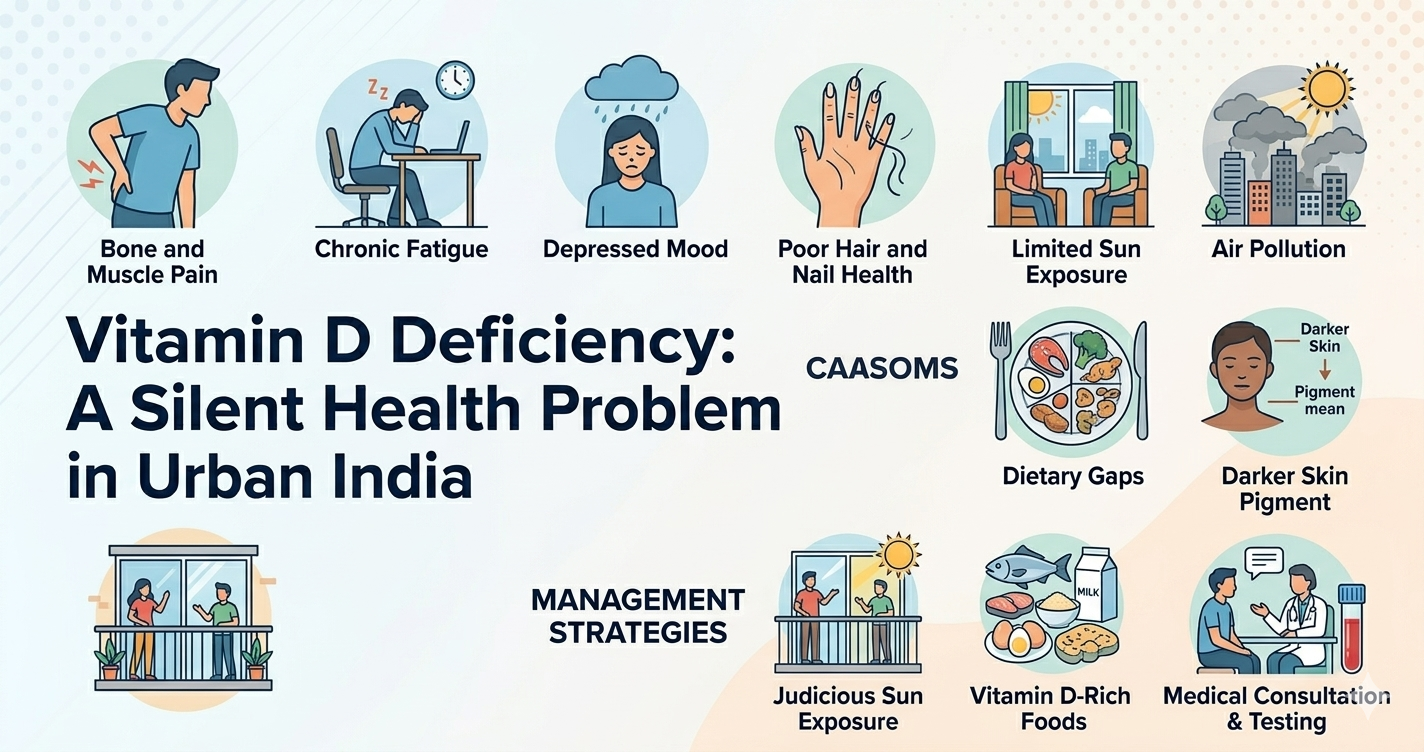
Vitamin D deficiency is increasingly being recognised as a major public health concern, particularly in urban populations. Despite India being a tropical country with abundant sunlight, a large proportion of people living in cities suffer from low vitamin D levels due to indoor lifestyles, air pollution, and limited outdoor exposure.
According to several studies, nearly 70–90% of Indians may have insufficient or deficient vitamin D levels, especially in metropolitan areas. This widespread deficiency contributes to multiple vitamin D deficiency problems, including bone weakness, fatigue, poor immunity, and metabolic disturbances.
Many people do not realise they have a vitamin D deficiency until symptoms start affecting their daily life. Recognising the early signs and seeking timely vitamin D deficiency treatment can prevent long-term health complications.
Key Takeaways
- Studies estimate that 70–90% of Indians may have low vitamin D levels, making it one of the most common nutritional deficiencies in the country.
- Vitamin D is essential for bone strength, muscle function, immunity, and nerve health.
- Persistent fatigue, bone pain, muscle weakness, and mood changes may indicate a deficiency.
- Many patients experiencing weakness or imbalance often ask can vitamin d deficiency cause dizziness, which can occur in some individuals due to fatigue and muscle weakness.
- Early diagnosis and proper vitamin D deficiency treatment can prevent complications such as osteoporosis and bone fractures.
What Is Vitamin D Deficiency?
Vitamin D deficiency occurs when the body does not have enough vitamin D to maintain normal physiological functions. Vitamin D is crucial for the absorption of calcium and phosphorus, two minerals necessary for building and maintaining healthy bones.
Without adequate vitamin D, the body struggles to absorb calcium effectively, which can weaken bones and muscles over time. This can eventually lead to serious vitamin D deficiency problems, including bone demineralisation and muscle weakness.
Vitamin D also plays an important role in:
- Immune system regulation
- Nervous system function
- Muscle strength
- Cellular growth and repair
Vitamin D can be obtained through three main sources:
- Sunlight exposure on the skin
- Certain foods in the diet
- Nutritional supplements
Despite these sources, vitamin D deficiency remains widespread globally. A nationwide study analysing over 2.2 million diagnostic reports found that nearly half of Indians are vitamin D deficient.
Why Is Vitamin D So Important for the Body?
Vitamin D is essential for maintaining the balance of calcium in the bloodstream and supporting bone health. It helps the intestines absorb calcium and phosphorus, which are necessary for bone formation and maintenance.
When vitamin D levels drop significantly, the body absorbs less calcium from food. As a result, the body begins drawing calcium from the bones to maintain normal blood calcium levels.
Over time, this process can lead to weakened bones and several vitamin d deficiency problems, including:
- Osteoporosis (reduced bone density)
- Osteomalacia (soft bones in adults)
- Increased risk of fractures
- Muscle weakness and falls
Vitamin D also plays a role in immune health and cellular regulation. Because of this, researchers have explored possible associations between vitamin D levels and certain cancers. Some people search for vitamin D deficiency cancer symptoms, but it is important to understand that deficiency itself does not directly cause cancer symptoms. However, researchers continue studying its role in immune regulation and disease prevention.
What Are the Symptoms of Vitamin D Deficiency?
Vitamin D deficiency often develops gradually, and many individuals may not notice symptoms in the early stages.
Common symptoms may include:
- Persistent fatigue
- Bone pain
- Muscle weakness or cramps
- Joint discomfort
- Frequent infections
- Mood changes or depression
- Hair thinning
Some individuals also experience balance issues or lightheadedness. This is why patients frequently ask does vitamin D deficiency cause dizziness. In certain cases, muscle weakness and fatigue associated with low vitamin D levels may contribute to dizziness or imbalance.
A meta-analysis of 23 studies involving over 38,000 Indian children reported a vitamin D deficiency prevalence of 66.4%.
How Does Vitamin D Deficiency Affect the Skin?
Vitamin D plays an important role in skin health because it helps regulate immune responses and supports skin cell growth.
Low vitamin D levels can contribute to issues associated with vitamin d deficiency skin, such as:
- Dry or irritated skin
- Increased skin sensitivity
- Slow wound healing
Some studies also suggest links between vitamin D levels and inflammatory skin conditions. Certain vitamin D deficiency skin diseases, such as psoriasis, eczema, and dermatitis, may worsen when vitamin D levels are low.
Maintaining adequate vitamin D levels supports skin repair, immune defence, and healthy cell turnover.
What Causes Vitamin D Deficiency?
Vitamin D deficiency can occur due to several lifestyle, environmental, and medical factors.
Limited Sun Exposure
Modern urban lifestyles often involve long hours indoors. Office jobs, indoor entertainment, and limited outdoor activity reduce the body’s ability to produce vitamin D naturally.
Darker Skin Pigmentation
Individuals with higher melanin levels in their skin may require longer sun exposure to produce the same amount of vitamin D as those with lighter skin.
Poor Dietary Intake
Many diets lack foods naturally rich in vitamin D, increasing the risk of deficiency.
Medical Conditions
Certain digestive disorders can affect nutrient absorption. These include:
- Crohn’s disease
- Celiac disease
- Chronic liver disease
- Kidney disorders
Obesity
Vitamin D can become stored in fat tissue, making it less available for use by the body.
These factors contribute significantly to rising vitamin D deficiency problems in urban populations.
How Is Vitamin D Deficiency Diagnosed?
Vitamin D deficiency is usually diagnosed through a blood test that measures the level of vitamin D circulating in the body.
The most commonly used test is the:
25-hydroxyvitamin D (25-OH-D) test
Doctors may recommend testing if a patient has symptoms such as:
- Persistent fatigue
- Bone pain or muscle weakness
- Recurrent infections
- Chronic vitamin D deficiency problems
Routine screening may also be recommended for individuals at high risk of deficiency.
What Is the Best Vitamin D Deficiency Treatment?
The primary goal of vitamin D deficiency treatment is to restore normal vitamin D levels and maintain them over time.
Treatment usually involves a combination of the following approaches:
Vitamin D Supplements
Doctors commonly prescribe vitamin D supplements depending on the severity of the deficiency. Vitamin D3 (cholecalciferol) is often preferred because it is more easily absorbed by the body.
Sunlight Exposure
Regular sunlight exposure helps stimulate natural vitamin D production. Spending about 15–20 minutes in sunlight several times per week can significantly improve vitamin D levels.
Dietary Improvements
Foods that help increase vitamin D intake include:
- Fatty fish such as salmon and mackerel
- Egg yolks
- Mushrooms
- Cod liver oil
- Fortified milk and cereals
Diet alone may not fully correct severe deficiency, but it plays an important role in maintaining healthy levels after treatment.
Who Is Most at Risk for Vitamin D Deficiency?
Certain groups are more likely to develop vitamin D deficiency.
These include:
- Adults over the age of 65
- People with darker skin pigmentation
- Individuals who spend most of their time indoors
- People with digestive disorders
- Obese individuals
- People living in highly polluted urban environments
Urban residents often have reduced sunlight exposure due to high-rise buildings, office work, and air pollution, which increases the risk of deficiency.
How Can Vitamin D Deficiency Be Prevented?
Preventing vitamin D deficiency requires a combination of healthy lifestyle choices and proper nutrition.
Key prevention strategies include:
- Getting regular sunlight exposure
- Maintaining a balanced diet rich in vitamin D
- Engaging in outdoor physical activity
- Taking supplements if recommended by a doctor
- Undergoing periodic health check-ups
These steps can significantly reduce the risk of developing vitamin D deficiency problems.
When Should You See a Doctor for Vitamin D Deficiency?
If you experience symptoms such as persistent fatigue, bone pain, muscle weakness, or unexplained dizziness, it is important to consult a healthcare professional.
Many patients experiencing fatigue or imbalance often ask can vitamin D deficiency cause dizziness, and while dizziness may have several causes, checking vitamin D levels can help identify whether deficiency is contributing to the symptoms.
Early diagnosis and appropriate vitamin D deficiency treatment can restore energy levels, strengthen bones, and improve overall health.
Vitamin D deficiency may be common, but with awareness, proper nutrition, and timely medical guidance, it is both preventable and treatable.
Frequently Asked Questions (FAQs)
1. What are the common vitamin D deficiency problems?
Common vitamin D deficiency problems include bone pain, muscle weakness, fatigue, frequent infections, and reduced bone density. Long-term deficiency may lead to osteoporosis, increased fracture risk, and overall decline in muscle strength and immunity.
2. Can vitamin D deficiency cause dizziness?
Yes, in some individuals, vitamin D deficiency causes dizziness due to muscle weakness, fatigue, or reduced neuromuscular coordination. However, dizziness can have multiple causes, so medical evaluation and blood testing are recommended for proper diagnosis.
3. Does vitamin D deficiency cause dizziness regularly?
Many patients ask does vitamin D deficiency cause dizziness, especially when experiencing fatigue or weakness. While vitamin D deficiency may contribute to imbalance in some cases, dizziness may also result from dehydration, anaemia, or other medical conditions.
4. What are the best vitamin D deficiency treatment options?
The most effective vitamin D deficiency treatment usually includes vitamin D supplements, safe sunlight exposure, and dietary changes. Doctors may recommend vitamin D3 supplements along with foods like fatty fish, egg yolks, and fortified dairy products.
5. How does vitamin D deficiency affect the skin?
Low vitamin D levels may affect skin health. Issues related to vitamin D deficiency skin may include dryness, delayed wound healing, and increased skin sensitivity because vitamin D plays a role in skin cell repair and immune function.
6. Can vitamin D deficiency cause skin diseases?
Some studies suggest a link between low vitamin D levels and certain vitamin D deficiency skin diseases, such as psoriasis, eczema, and dermatitis. Maintaining healthy vitamin D levels may support skin immunity and reduce inflammation.
7. Are there vitamin D deficiency cancer symptoms?
People often search for vitamin D deficiency cancer symptoms, but vitamin D deficiency itself does not directly cause cancer symptoms. However, research suggests vitamin D may influence immune function and cellular regulation related to cancer risk.