
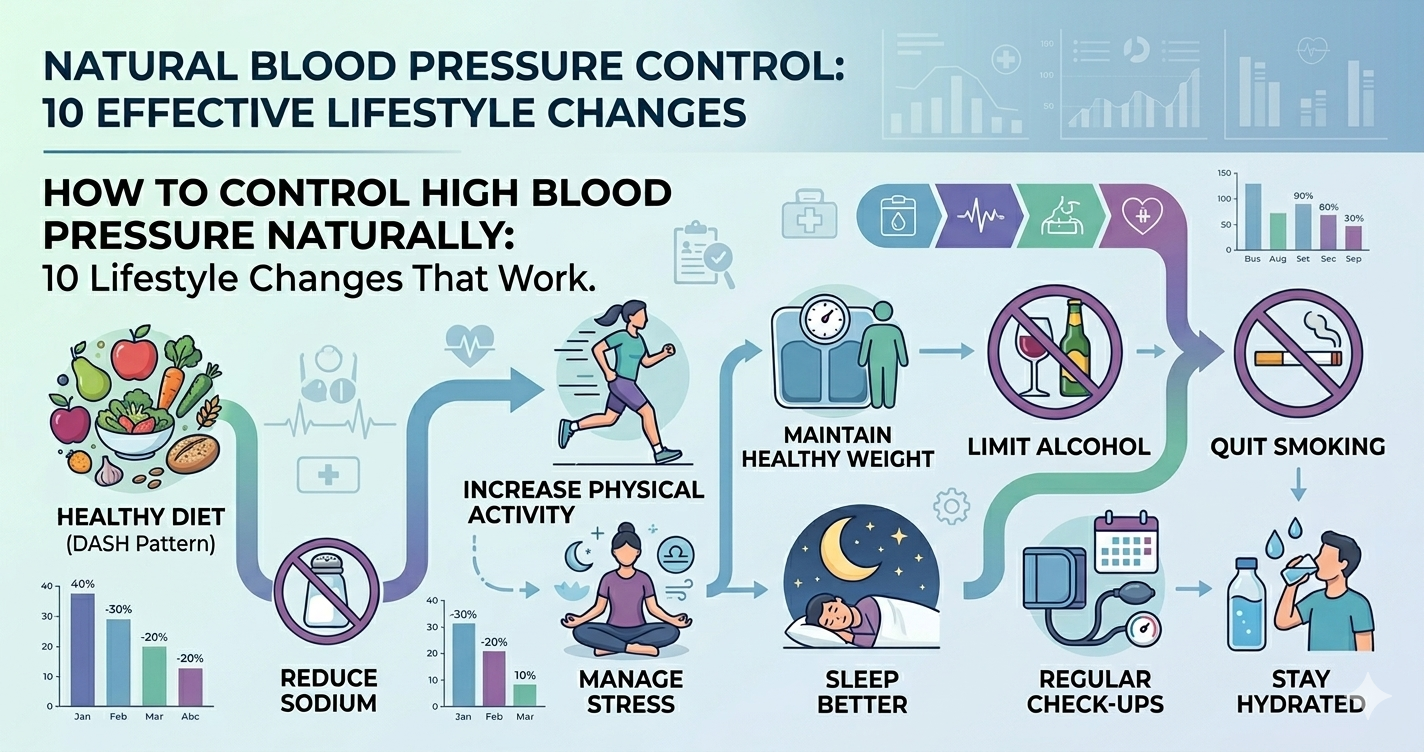
Key Takeaways:
- Hypertension often has no symptoms, which is why it is called the silent killer.
- Blood pressure of 130/80 mmHg or higher is considered hypertension.
- Untreated hypertension increases the risk of heart attack, stroke, and kidney disease.
- Lifestyle changes such as reducing salt, exercising regularly, and maintaining a healthy weight help control blood pressure.
- Regular blood pressure screening helps detect and manage hypertension early.
According to the World Health Organization (WHO), an estimated 220 million people in India are living with hypertension, and only 12% have their blood pressure under control. The Great India Blood Pressure Survey found that nearly 1 in 3 Indian adults (30.7%) have hypertension, with urban prevalence even higher.
Even more alarming, research published in BMC Public Health (2024) using NFHS-5 data reveals that prevalence reaches 48.4% in Indians aged 60 and above. And as the Global Heart Journal study found, hypertension is associated with six- to eight-fold increases in the odds of ischemic heart disease and stroke mortality in India.
The good news? Many cases can be managed or reversed through proven lifestyle changes. This guide covers 10 evidence-backed strategies to help you control high blood pressure naturally and protect your heart health for the long term.
What Is High Blood Pressure? Understanding the Numbers
Blood pressure is measured in millimetres of mercury (mm Hg) and expressed as two numbers:
• Systolic pressure – the force when your heart beats
• Diastolic pressure – the force when your heart rests between beats
| Category | Blood Pressure Reading |
| Normal | Less than 120/80 mm Hg |
| Elevated | 120–129 / less than 80 mm Hg |
| Stage 1 Hypertension | 130–139 / 80–89 mm Hg |
| Stage 2 Hypertension | 140 or higher / 90 mm Hg or higher |
| Hypertensive Crisis | 180/120 mm Hg or higher — seek emergency care immediately |
Why Hypertension Is a Growing Crisis in India
Hypertension is not just a global problem; it is an urgent Indian public health emergency. Consider these facts:
• WHO India: Nearly 63% of total deaths in India are due to non-communicable diseases, of which 27% are attributed to cardiovascular disease, affecting 45% of people aged 40–69.
• The Lancet Regional Health – SE Asia: Less than one-fourth of hypertensive patients in India had their BP under control during 2016–2020, with large regional disparities.
• PMC – Anchala et al.: Hypertension is directly responsible for 57% of all stroke deaths and 24% of all coronary heart disease deaths in India.
• GHAI (2024): A recent study found 35% of 10–12-year-olds and 25% of 13–19-year-olds had BP in the Stage 1 or 2 hypertension range, about 69 million Indian youth at risk.
• AHA Circulation: The number of Indians with hypertension is expected to grow from 118 million to 213.5 million by 2025.
• ICMR–INDIAB Study: Every second individual in India is physically inactive, and less than 10% engage in regular physical activity, a key driver of rising BP.
Note: At least 30% of Indians have never had their blood pressure checked (GHAI, 2024), and only 46.8% of hypertensive Indians are aware of their condition (Lancet SE Asia, 2022).
Stage 1 vs Stage 2 Hypertension: What You Need to Know
Stage 1 Hypertension (130–139 / 80–89 mm Hg)
This is the early stage. Lifestyle interventions alone can often reverse it. Key actions:
• Follow a heart-healthy diet (DASH diet)
• Reduce sodium intake
• Exercise regularly, at least 150 min/week
• Manage stress
• Achieve and maintain a healthy body weight
Stage 2 Hypertension (140+ / 90+ mm Hg)
Stage 2 is more severe and typically requires both medication and lifestyle changes. Commonly prescribed medications include ACE inhibitors, beta-blockers, diuretics, and calcium channel blockers. Even with medication, the lifestyle strategies below remain essential for long-term control.
10 Lifestyle Changes to Control High Blood Pressure Naturally
1. Follow the DASH Diet
The Dietary Approaches to Stop Hypertension (DASH) diet is one of the most clinically validated dietary strategies for managing high blood pressure. It emphasises nutrient-dense foods rich in potassium, magnesium, and calcium.
Include more:
• Fruits and vegetables (aim for 5+ servings daily)
• Whole grains (brown rice, oats, whole wheat roti)
• Lean proteins (fish, chicken, lentils, dal)
• Low-fat dairy (curd, buttermilk)
• Nuts and legumes (almonds, rajma, chickpeas)
Limit:
• Processed and packaged foods
• Excess salt and pickles
• Sugary drinks (sweetened chai, cold drinks)
• Saturated fats (excess ghee, fried snacks)
India-specific tip: Traditional foods like amla, methi, palak, and chaas (buttermilk) align well with DASH principles. Small swaps, brown rice instead of white, almonds instead of namkeen, can make a measurable difference.
2. Reduce Sodium (Salt) Intake
Excess sodium is one of the most direct contributors to high blood pressure. Health experts recommend limiting sodium to around 1,500–2,000 mg per day for people with hypertension, roughly less than one teaspoon of salt.
Practical tips:
• Avoid packaged namkeens, chips, papadams, and processed foods
• Use herbs, spices (turmeric, cumin, coriander), and lemon juice for flavour instead of salt
• Choose low-sodium versions of pickles and sauces
• Reduce the salt in cooking gradually; your palate will adapt
Research note: A Lancet study found that high salt intake in northeast Indian states is a key driver of elevated hypertension and stroke risk in those regions.
3. Exercise Regularly
Regular physical activity strengthens the heart muscle, improves circulation, and lowers blood pressure. The American Heart Association recommends at least 150 minutes of moderate-intensity exercise per week, just 30 minutes a day, 5 days a week.
Effective exercises for BP control:
• Brisk walking (most accessible for Indian adults)
• Cycling or swimming
• Yoga, especially pranayama (breathing exercises)
• Dancing or aerobics classes
Indian context: ICMR–INDIAB data shows that every second Indian is physically inactive, and less than 10% engage in recreational physical activity. Sitting for long hours, common in urban desk jobs, is an independent risk factor for hypertension.
4. Maintain a Healthy Weight
Excess body weight forces the heart to work harder, raising blood pressure. Losing even 5–10% of body weight can significantly lower BP. In India, abdominal obesity (belly fat) is particularly concerning; even those with a normal BMI can have high visceral fat, which increases cardiovascular risk.
Weight management strategies:
• Focus on balanced, portion-controlled meals
• Reduce refined carbohydrates (maida, white bread, excess rice)
• Increase daily physical activity
• Track waist circumference: men should aim for under 90 cm, women under 80 cm
5. Manage Stress Effectively
Chronic stress triggers the release of cortisol and adrenaline, causing BP spikes. Over time, these spikes contribute to sustained hypertension. Rapid urbanisation, work pressure, and financial stress are especially prevalent among Indian adults.
Proven stress-reduction techniques:
• Deep breathing
• Meditation and mindfulness (even 10 minutes daily helps)
• Yoga, widely accessible and culturally familiar in India
• Spending time outdoors or in nature
• Journalling, music, or creative hobbies
6. Limit Alcohol Consumption
Alcohol raises blood pressure when consumed in excess. Recommended limits: one drink per day for women, two for men. For anyone with Stage 1 or 2 hypertension, even moderate alcohol may be harmful; consult your doctor. Reducing or eliminating alcohol also improves liver health and body weight, both linked to BP control.
7. Quit Smoking and Tobacco
Smoking and all forms of tobacco directly damage blood vessel walls and cause an immediate BP spike after each use. India has one of the world’s largest tobacco-consuming populations. According to PMC research, tobacco is a significant independent risk factor for hypertension among Indians.
Benefits of quitting tobacco:
• Improved blood vessel function within weeks
• Reduced risk of heart attack and stroke
• Lower blood pressure readings over time
• Better response to antihypertensive medication
8. Get Quality Sleep (7–9 Hours Nightly)
Poor sleep disrupts the hormonal regulation of blood pressure. People who sleep fewer than 6 hours a night are significantly more likely to develop hypertension. Sleep apnoea, where breathing repeatedly stops during sleep, is also a common, underdiagnosed cause of high BP in India.
Sleep hygiene tips:
• Maintain a consistent sleep-wake schedule, even on weekends
• Avoid caffeine (tea/coffee) after 4 PM
• Reduce screen time at least 1 hour before bed
• Avoid heavy, late-night meals, a common issue in Indian households
9. Eat More Potassium-Rich Foods
Potassium helps the kidneys excrete excess sodium, directly reducing blood pressure. Most Indians don’t consume enough potassium-rich foods, especially in urban areas with processed, high-sodium diets.
Best potassium-rich foods for Indian diets:
• Bananas, coconut water
• Palak (spinach), methi, drumstick leaves
• Sweet potatoes, rajma (kidney beans)
• Lentils (dal) and chickpeas
• Avocados and tomatoes
10. Monitor Your Blood Pressure Regularly
You cannot manage what you don’t measure. Regular BP monitoring helps track progress, spot warning trends early, and give your doctor accurate data. Home BP monitors are affordable and widely available in India.
Monitoring tips:
• Check at the same time each day, ideally morning and evening
• Rest for 5 minutes before measuring
• Avoid caffeine, smoking, or exercise 30 minutes before checking
• Log your readings in a diary or phone app
• Share trends with your doctor at every visit
Critical stat: At least 30% of Indians have never had their blood pressure checked (GHAI, 2024), and only 46.8% of hypertensive Indians are even aware of their condition (Lancet SE Asia, 2022). Regular screening is the single most important first step.
When to Seek Emergency Medical Care
If your blood pressure reaches 180/120 mm Hg or higher, this may indicate a hypertensive crisis, a life-threatening emergency requiring immediate medical attention.
Warning symptoms:
• Severe or sudden headache
• Chest pain or tightness
• Shortness of breath
• Sudden vision changes
• Confusion or difficulty speaking
If any of these symptoms occur, call 112 (India emergency number) or go to the nearest hospital immediately.
Manage Hypertension Today for a Healthier Tomorrow
Managing high blood pressure is not just about medication. With over 220 million Indians living with hypertension and only 12% achieving control, lifestyle change is the most powerful and accessible tool available.
Small, consistent habits, eating less salt, walking more, sleeping better, managing stress — compound into lasting BP control and a dramatically reduced risk of heart attack, stroke, and kidney disease. Even if you’re already on medication, lifestyle improvements will enhance its effect and may, with your doctor’s guidance, reduce your required dosage over time.
FAQs
1. What is hypertension?
Hypertension, or high blood pressure, is a condition where the force of blood against the artery walls remains consistently high, usually 130/80 mmHg or above, increasing the risk of heart disease, stroke, and kidney damage.
2. What are the early signs and symptoms of hypertension?
Most people with hypertension do not experience noticeable symptoms. In severe cases, symptoms may include headaches, dizziness, chest pain, blurred vision, fatigue, or shortness of breath.
3. What causes high blood pressure?
Common causes of hypertension include high salt intake, obesity, stress, lack of exercise, smoking, alcohol consumption, genetics, and certain medical conditions such as diabetes or kidney disease.
4. What is the normal blood pressure range?
A normal blood pressure reading is below 120/80 mmHg. Readings between 120–129 systolic with less than 80 diastolic are considered elevated and may lead to hypertension if not managed.
5. How can I reduce high blood pressure naturally?
High blood pressure can often be controlled by reducing salt intake, exercising regularly, maintaining a healthy weight, managing stress, limiting alcohol, quitting smoking, and following a balanced diet such as the DASH diet.
6. How often should blood pressure be checked?
Adults should check their blood pressure at least once a year, while individuals with risk factors or existing hypertension may need more frequent monitoring as advised by a doctor.
7. When should I see a doctor for high blood pressure?
You should consult a doctor if your blood pressure readings are consistently above 130/80 mmHg, or if you experience symptoms like chest pain, severe headaches, dizziness, or difficulty breathing.